
Non Stick Frying Pan for Gas Stove: Complete Buying And Usage Guide
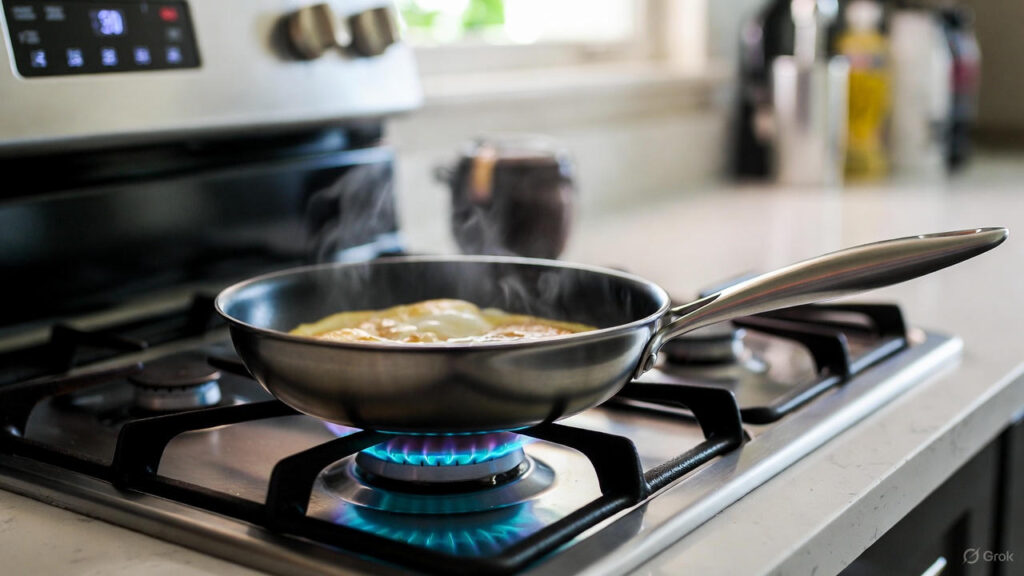
If you cook on a gas stove, choosing the right frying pan matters more than you think. Flames are powerful, heat changes fast, and the wrong pan can burn food, damage coatings, or wear out in months.
No hype. No brand pushing. Just real answers based on how nonstick pans actually behave on gas burners.
Why Gas Stoves Need Special Non-Stick Frying Pans
Gas stoves are different from electric or induction cooktops.
They produce:
Direct open flame
Instant heat changes
Uneven heat zones (center hotter than edges)
A low-quality nonstick pan may work fine on electric stoves but fail quickly on gas due to overheating and warping.
Common problems people face on gas stoves:
Nonstick coating peeling too fast
Burnt food in the center, raw edges
Pan bottom warping
Toxic fumes from overheated coatings
The right non stick frying pan for gas stove solves all of these.
Is Non-Stick Cookware Safe for Gas Stoves?
Yes — if you choose the right type and use it correctly.
Safe when:
The pan has thick base construction
You avoid high flame exposure on empty pans
The coating is PFOA-free
You cook at low to medium heat
Unsafe when:
Thin aluminum pans are used on high flame
The pan overheats while empty
Scratched or peeling coatings are ignored
Key truth:
Gas stoves don’t destroy nonstick pans — misuse does.
Best Materials for Non Stick Frying Pan on Gas Stove
Let’s break this down practically.
1. Hard-Anodized Aluminum (BEST Choice)
T-Fal Ultimate Hard Anodized Nonstick Cookware Set 17 Piece, Nonstick Pots and Pans

Why it works on gas:
Stronger than regular aluminum
Handles flame heat better
Distributes heat evenly
Resistant to warping
Ideal for:
Daily cooking
Long-term use on gas stoves
If you want one safe option without overthinking — choose hard-anodized nonstick.
2. Forged Aluminum Non-Stick
Sur La Table Kitchen Essentials 10 Piece PFA Free Non-Toxic Titanium Ceramic Nonstick
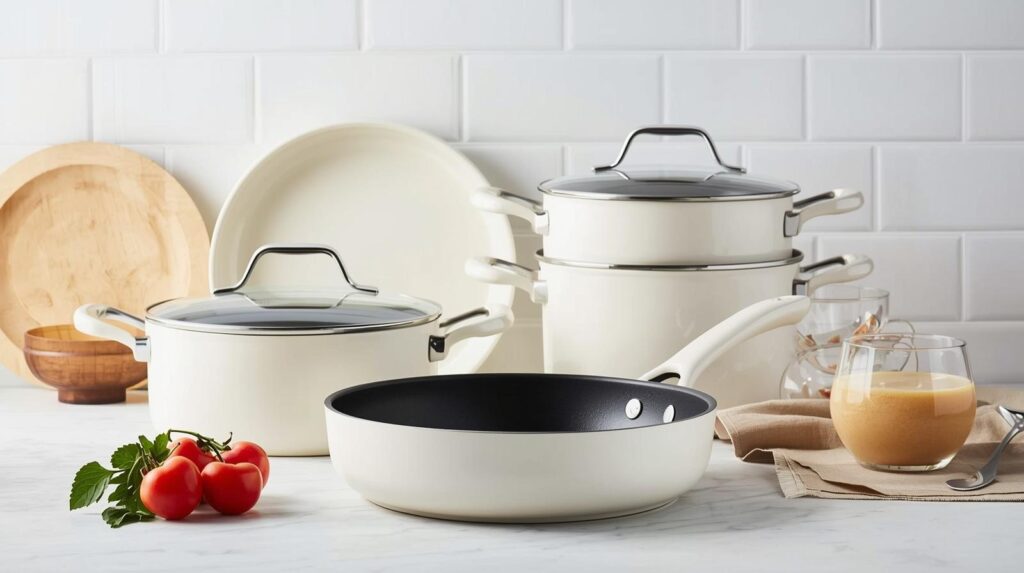
Forged aluminum pans are thicker than stamped aluminum.
Pros:
Better heat control
Lightweight
Affordable
Cons:
Shorter lifespan than hard-anodized
Good for home cooks who want balance between price and durability.
3. Ceramic Non-Stick (Use Carefully)
T-fal Revive Ceramic Cookware Sets, Pots and Pans Set Nonstick, (12 pieces)
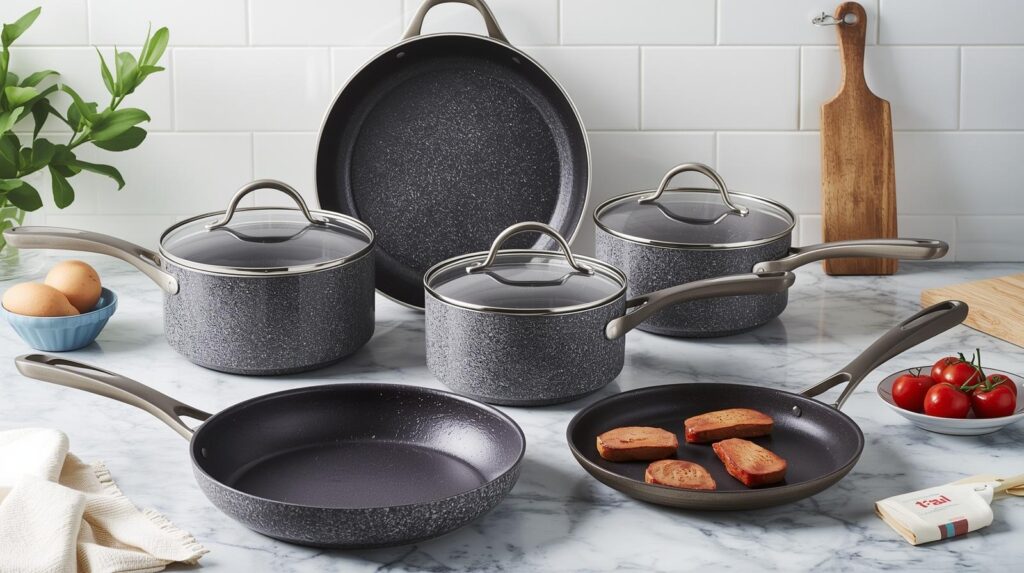
Ceramic coatings are chemical-free but not flame-friendly.
Pros:
PTFE-free
Smooth cooking surface
Health-focused appeal
Cons on gas stove:
Coating degrades faster
Sensitive to high flame
Short lifespan
Best for low-heat gas cooking only.
Avoid Thin Non-Stick Pans on Gas Stoves
Cheap, thin pans:
Overheat quickly
Release fumes
Lose coating fast
Warp permanently
They may look good but cost more in replacements.
Ideal Pan Size for Gas Stove Cooking
Choosing the wrong size is a common mistake.
Recommended sizes:
8–9 inch: Eggs, omelets, single portions
10–11 inch: Everyday cooking (best balance)
12 inch: Family meals, stir-fry, shallow frying
Pro tip:
The pan base should match the burner size.
Flames licking up the sides damage coatings.
Flat Bottom vs Slightly Curved Bottom – Which Is Better?
For gas stoves:
Flat bottom = best
Better heat contact
Stable cooking
Even flame distribution
Curved bottoms are meant for woks, not frying pans.
Handle Type Matters on Gas Stoves
Look for:
Heat-resistant handles
Riveted or double-screw handles
Silicone or phenolic grip
Avoid:
Cheap plastic handles
Loose single-screw handles
Hollow metal handles without insulation
Your pan should be comfortable to lift even when hot.
Can You Use High Flame With Non-Stick on Gas Stove?
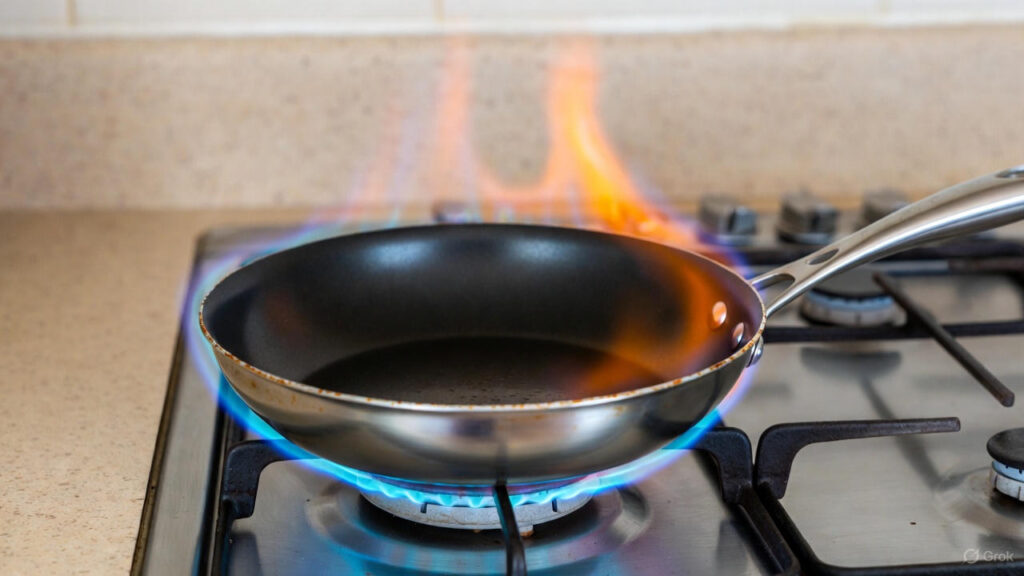
Short answer: No
Long answer:
Nonstick coatings perform best at low to medium heat
High flame breaks down coating faster
Overheating can release fumes
Safe cooking rule:
Preheat on medium, cook on low to medium, never empty-heat on high flame.
Best Cooking Practices for Non Stick Frying Pan on Gas Stove
Follow these and your pan will last years longer.
Do:
Preheat gently
Use wooden or silicone utensils
Add oil before heating
Clean with soft sponge
Let pan cool before washing
Don’t:
Heat empty pan on high flame
Use metal utensils
Stack without protection
Wash hot pan with cold water
Cleaning Non-Stick Pans Used on Gas Stove
Gas cooking creates more residue.
Best cleaning method:
Let pan cool completely
Use warm water + mild dish soap
Soft sponge only
Dry immediately
Avoid:
Steel wool
Harsh cleaners
Dishwasher (unless manufacturer allows)
How Long Does a Non Stick Frying Pan Last on Gas Stove?
Realistic lifespan:
Hard-anodized: 3–5 years
Forged aluminum: 2–3 years
Ceramic: 1–2 years
Cheap thin pans: 6–12 months
If food sticks or coating peels — replace it.
Signs Your Non-Stick Pan Is No Longer Safe
Replace your pan if you notice:
Peeling or flaking coating
Deep scratches
Uneven heating
Persistent burning smell
Discoloration at the base
Safety always comes before savings.
Non Stick Frying Pan vs Stainless Steel on Gas Stove
| Feature | Non-Stick Frying Pan | Stainless Steel Pan |
|---|---|---|
| Ease of Use | Very easy | Skill required |
| Oil Usage | Minimal | More oil needed |
| Heat Tolerance | Medium | High |
| Lifespan | Shorter (1–3 years) | Long (10+ years) |
| Best For | Eggs, pancakes, delicate foods | Searing meat, sauces, high-heat cooking |
Best setup:
Use both, not one instead of the other.
Who Should Buy a Non Stick Frying Pan for Gas Stove?
This pan is perfect for:
Home cooks
Families
Beginners
Health-conscious cooking
Quick everyday meals
Not ideal for:
High-heat searing
Professional kitchens
Open flame cooking outdoors
Best Non Stick Frying Pan for Gas Stove (Real-World Picks)
Not every nonstick pan survives gas stove cooking. Based on material behavior, heat tolerance, and long-term safety, these are the types of pans that actually perform well.
Best Overall: Hard-Anodized Non Stick Frying Pan
Why this is the safest choice for gas stove users
Thick base resists warping
Handles direct flame better than regular aluminum
Even heat distribution prevents center burning
Longest lifespan among nonstick options
Best for:
Daily home cooking
Families and frequent cooks
Recommended if you want one reliable pan that lasts.
Best Budget Option: Forged Aluminum Non Stick Frying Pan
Why it works
Thicker than cheap stamped pans
Good heat control on gas stoves
Lightweight and affordable
Limitations
Shorter lifespan than hard-anodized
Needs careful heat control
Good choice for beginners or small households.
Best Health-Focused Option: Ceramic Non Stick Frying Pan
Why people choose it
PTFE- and PFOA-free
Smooth cooking surface
Easy cleanup
Important warning
Use low to medium flame only
Not suitable for aggressive gas cooking
Best for light cooking, not high heat.
What We Don’t Recommend
Avoid:
Thin nonstick pans
Ultra-cheap no-brand cookware
Pans without flame-guarded base
Decorative pans without heat specs
They fail quickly on gas stoves and cost more in replacements.
Frequently Asked Questions
Is non stick frying pan good for gas stove?
Yes, if it has a thick base and is used at low to medium heat.
Which coating is safest for gas stove?
PFOA-free hard-anodized nonstick is the safest and most durable.
Can gas flame damage nonstick coating?
Only if overheated or used incorrectly.
Can I use induction nonstick pan on gas stove?
Yes, induction-compatible pans work well on gas too.
How do I prevent burning food?
Match pan size to burner and avoid high flame.
Final Verdict: Is Non Stick Frying Pan for Gas Stove Worth It?
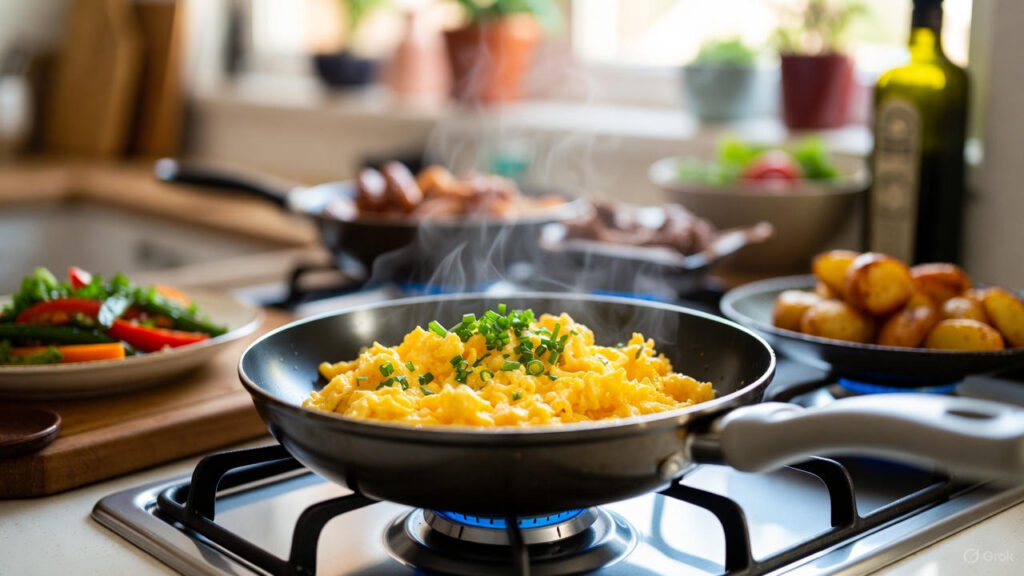
Absolutely — when chosen and used correctly.
A good non stick frying pan for gas stove makes everyday cooking:
Faster
Healthier
Easier
More enjoyable
The key is thick base, proper material, and correct heat control.
If you respect the pan, it will reward you with smooth cooking and easy cleanup for years.
Cookware Set for Gas Stove
Cookware Set for Gas Stove: Complete Buying Guide for...
Read More

Lightweight Cookware for Seniors
Lightweight Cookware for Seniors: A Complete, Practical Buying Guide...
Read More
Best Small Stainless Steel Saucepan
Small Stainless Steel Saucepan: The Everyday Pot Every Kitchen...
Read More